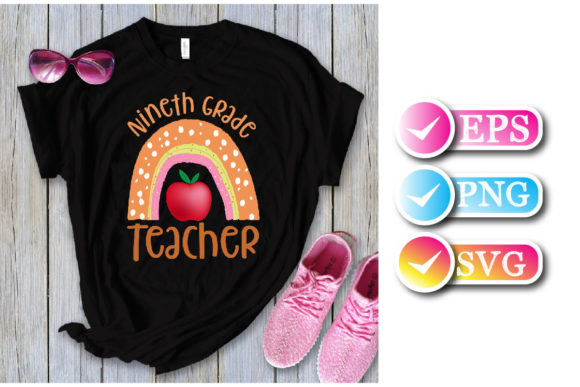
9th Grade Teacher Back to School: Turning a Simple Design Into a Reliable Revenue Stream
Teachers returning to the classroom in the fall represent one of the most consistent and appreciative audiences in the print-on-demand world. The "9th Grade Teacher Back to School" design theme sits at a sweet spot—specific enough to feel personal, broad enough to appeal across multiple product types. Yet many creators, whether they are experienced sellers or just starting out, treat this design like any other seasonal graphic. That approach often leads to disappointing sales, poor print quality, or a product that simply does not connect with the buyer.
This article walks through what this design category actually requires, where people commonly go wrong, and how to get it right the first time. Whether you plan to put this design on a t-shirt, a hoodie, a mug, a tote bag, a phone case, or even use it for vinyl decals and iron-on transfers, the principles remain the same. The goal is to create something a 9th grade teacher actually wants to wear, carry, or display—not just something that looks okay on a mockup.
Why the "9th Grade Teacher Back to School" Design Deserves More Thought Than You Think
On the surface, this seems straightforward: take a back-to-school graphic, add "9th Grade Teacher," and list it on your store. But teachers at this grade level face a unique set of challenges. They are welcoming students who are transitioning from middle school into high school. They deal with freshmen nerves, changing schedules, and a whole new level of academic expectation. A design that acknowledges that reality—rather than just slapping a chalkboard or apple icon on a shirt—will resonate much more deeply.
The mistake many beginners make is treating this as a generic teaching design. They use fonts that feel too juvenile for a high school setting, or they pick clip art that looks more appropriate for elementary grades. A 9th grade teacher is not a kindergarten teacher. The visual language needs to reflect a slightly older, more structured environment while still feeling warm and inviting. If the design looks like it belongs on a second-grade classroom door, most high school teachers will scroll right past it.
Ignoring the Product Medium
A design that works beautifully on a t-shirt can look terrible on a mug or a tote bag. The same applies to hoodies, phone cases, and especially vinyl decals or iron-on transfers. The mistake happens when someone takes a single digital file and applies it to every product without adjusting for size, resolution, or placement. For example, a highly detailed design with thin lines may print crisp on a flat garment but become unreadable when shrunk down for a phone case or a decal. On a hoodie, the fabric texture can blur fine details. On a mug, the curve of the surface can distort text that sits too close to the edge.
The practical approach is to test your design at the actual dimensions it will be printed. If you are selling through a print-on-demand service, check their template guides carefully. Each product has a specific print area, and ignoring those measurements leads to cut-off text, stretched graphics, or elements that simply disappear into the seam or rim. For cut machines and vinyl decals, make sure your design has clean, closed paths and that no text is too thin to weed properly. A font stroke under 1.5 mm in a decal often becomes impossible to transfer without tearing.
Choosing Fonts That Undermine the Design
Typography choices in teacher-themed designs often fall into two traps: either the font feels too childish, or it goes too far in the opposite direction and feels cold and corporate. Neither works well for a 9th grade teacher. A bouncy, cartoonish script might feel out of place for a high school setting, while a rigid sans-serif can look like a textbook cover. The better approach is to choose a font that feels professional but approachable. Think clean sans-serifs with a slight rounded edge, or a handwriting style that is legible and confident rather than overly decorative.
Another common issue is using too many fonts in one design. Three or four different typefaces on a single graphic rarely look cohesive. It makes the design feel busy and reduces the clarity that a teacher likely wants. Stick to one strong font for the main message and at most one secondary font for a supporting line. If the design includes the year, a simple numeral font that matches the primary style is usually enough.
Overlooking the Emotional Context
A design that says "9th Grade Teacher Back to School" can land in two very different emotional spaces. Some teachers feel excited and energized about the new year. Others feel anxious, overwhelmed, or simply tired. A design that acknowledges both realities—or leans into the positive side without being saccharine—tends to perform better than something that tries too hard to be funny or clever. Sarcastic or overly negative phrasing can backfire because teachers often wear these items in front of students and colleagues.
The most successful designs in this category use a tone that is proud, warm, or gently humorous without being cynical. For example, a simple layout with "9th Grade Teacher" and a subtle school-related icon in a clean, modern style often sells better than a joke that only lands for a small subset of buyers. If you want to include humor, keep it universal—something about surviving the first week, organizing binders, or the sheer volume of paperwork tends to resonate without feeling exclusionary.
What to Check Before You Buy, Download, or Use a Design
Whether you are purchasing a pre-made design or creating your own, there are specific quality checks that many people skip. These oversights directly affect the final product and can turn a promising item into something that collects dust in a warehouse or sits unsold in a store.
File Format and Resolution
For print-on-demand, a raster file (like PNG or JPEG) needs to be at least 300 DPI at the final print size. A file that looks sharp on your computer screen may become pixelated when printed on a hoodie or a tote bag. For cut machines and vinyl decals, vector formats such as SVG, AI, or EPS are essential. A PNG that works for a t-shirt will not cut cleanly on a machine. Many sellers buy a bundled design pack thinking it will work for everything, only to discover that the decal version is missing or the SVG files are poorly constructed. Always confirm that the file type matches the product you plan to produce.
Color Expectations Across Products
Colors shift between screens, printers, and materials. A design that looks vibrant on your monitor may print dull on a dark hoodie or washed out on a ceramic mug. For garments, check whether the design uses a white underbase or requires a specific fabric color to pop. For mugs and phone cases, the printing process often reduces brightness slightly. If you are using a service that handles printing for you, order a sample before listing widely. The small cost of a sample is far less than the cost of refunds and damaged reputation from a product that did not deliver what was shown in the mockup.
Licensing and Usage Rights
This point is frequently overlooked, especially by new sellers. A design purchased from a marketplace may come with restrictions. Some licenses allow personal use only, meaning you cannot sell products with that design. Others permit commercial use but cap the number of sales or require attribution. When you buy a design to use on t-shirts, hoodies, mugs, tote bags, phone cases, or any other product, you need a commercial license that explicitly covers print-on-demand. The same applies to fonts—free fonts are not always free for commercial use. Checking the license upfront prevents you from building a store around a design you legally cannot sell.
Practical Advice for Using the Design Across Multiple Products
One of the strengths of the "9th Grade Teacher Back to School" theme is its versatility. The same core design can appear on a t-shirt for everyday wear, a hoodie for cooler months, a mug for the classroom desk, a tote bag for carrying papers home, and a phone case for daily use. But each product requires a slightly different approach.
For t-shirts and hoodies, the design should be large enough to read from a few feet away. Centered chest prints work well, but a left-chest mini version can also be popular for teachers who want something subtle. For mugs, keep the design compact and avoid wrapping text around the full circumference—teachers usually want to see the message at a glance. For tote bags, a design that works vertically or horizontally depending on the bag shape gives you more flexibility. For phone cases, the design needs to fit within the case template and should avoid small details that disappear at that scale. For vinyl decals and iron-on transfers, simplify the design to its core elements. Remove shading, gradients, and thin lines that do not transfer cleanly. A two-color flat design is often the most reliable choice for these applications.
If you are creating designs for cut machines, pay attention to the order of layers. The machine reads each color as a separate cut, so a design with many overlapping colors takes longer to assemble and is more prone to misalignment. Reducing the color count to two or three makes the process smoother and improves the final appearance. For cards, invitations, or printables, the design can be more decorative because the printing surface is smooth and the user controls the output quality. But even here, leaving enough white space around the text ensures the design remains readable and elegant.
Building a Small Product Line That Makes Sense
Rather than listing the same design on every possible product and hoping something sticks, consider which items a 9th grade teacher actually uses regularly. A t-shirt and a mug are almost guaranteed sellers in this niche. A hoodie performs well in regions with cool fall weather. A tote bag appeals to teachers who carry materials home. Phone cases and decals are lower-volume but higher-margin items that can round out a collection. Skip products that do not fit the lifestyle of a teacher—items like aprons or baby onesies, unless you have a very specific reason to include them, will waste your listing fees and distract from your core offering.
If you are producing physical items yourself, start with one or two product types and validate the demand before expanding. A small, focused inventory that sells consistently is far better than a large catalog where most items never move. For those using print-on-demand services, list a handful of products with the design, promote them in teacher-focused groups or social media channels, and watch which formats get the most attention. That data will tell you where to put your effort next.
Final Considerations for a Design That Lasts
The back-to-school season is intense but relatively short. However, a well-designed "9th Grade Teacher" graphic can sell beyond August and September. Many teachers buy new gear throughout the year—for the start of a new semester, for teacher appreciation week, or simply to refresh their wardrobe. If the design avoids seasonal clutter like leaves, apples, or specific date ranges, it remains relevant for months. A clean, timeless layout with a clear grade level and a professional look will outlast a design that is tied too tightly to one moment in the school year.
Also consider the audience beyond the teacher themselves. Family members, friends, and colleagues often purchase teacher-themed items as gifts. If a design reads clearly and looks like something a teacher would be proud to wear or use, it becomes an easy gift choice. That expands the buying pool well beyond the individual educator.
Taking a thoughtful, product-specific approach to "9th Grade Teacher Back to School" designs does not mean overcomplicating things. It means respecting the audience, understanding the medium, and making choices that hold up under real-world conditions. A design that passes those tests will serve you well across t-shirts, hoodies, mugs, tote bags, phone cases, decals, transfers, and any other product you choose to explore.